
Showing posts with label presidential election 2008. Show all posts

Thursday, November 6, 2008

News Roundup: How Latinos and Immigrant Voters Decided This Election

Community Organizers Welcome One of their Own to the White House

Standing FIRM:

An Online Community for Migrant Rights!

Posted by rachelfirm on November 6, 2008


Powered by FeedBurner

Wednesday, November 5, 2008

Thank you and Congratulations People of The United States of America


Thank you!

You proved that change can happen. You built an unprecedented grassroots organization in all 50 states that brought a record number of people into the political process -- many for the first time, many for the first time in a long time.

Barack Obama, 44th President of the United States of America


Powered by FeedBurner

Sunday, November 2, 2008

BLACK BOX VOTING ALERT: "The Count" starts in 2 days: Instructions for Protect the Count

Black Box Voting was asked by YouTube to prepare an easy to follow public education program for Protecting the Count on ELECTION NIGHT and the days that follow. We collaborated with Videothevote.org and Election Defense Alliance.
YouTube has created a Channel called Video Your Vote. The Black Box Voting Protect the Count series contains important information and several video clips never before made public.

Please distribute immediately and as widely as you can. EASY INSTRUCTIONS: View the videos that best fit your location.

1. Protect the Count - most locations in America(4 min

Takes 90 minutes on Election Night. You can even go out after polls have closed.
Please also view video # 3, because it shows what to look for to identify tampered poll tapes and the kinds of small errors on tapes that can appear with memory card tampering. Upload any video you take to http://www.videothevote.org

- Post link or comments for what you found in the state and jurisdiction at http://www.blackboxvoting.org


2. Protect the Count - Absentee / Central Count (8 min)

(Applies to 13 states with CENTRALLY COUNTED ballots and/or HEAVY ABSENTEE VOTING)

These are the most challenging Protect the Count locations.


3. Protect the Count - New England / New Hampshire(5 min)


If you live anywhere in New England and can drive to any voting machine location in New Hampshire to observe and video poll closing, please do so. If you live anywhere in America that has polling place results tapes, please look at this video to see what tampered tapes look like.

Contact Protect the Count - New Hampshire organizers at protectthevote@gmail.com
You can view the list for which New Hampshire locations use voting machines
here: http://www.bbvforums.org/forums/messages/157/157.html


4. Protect the Count - New York (9 min)

New Yorkers are probably in the best shape for Election 2008, but not for long. This shows the details of how the counting
of the lever machines proceeds after polls close, and gives you the details of the fight New Yorkers will have on your hands in 2009.

I'm counting on you to be as proactive as possible to fight for your voting rights. The actions in the Protect the Count series are self-serve, simple to do, and designed for just grabbing a neighbor or a buddy and taking action.
Don't worry about blanketing every area or organizing the whole state. Just pick a place and DO it. I guarantee it will be a fascinating and important experience, and could provide THE crucial evidence in the very undesirable event that the election turns out not to be fair.

This is an Election Alert for Black Box Voting list members. If someone has passed this along to you and you would like to receive these alerts, you can register here: http://www.bbvforums.org/cgi-bin/forums/board-profile.cgi?action=register

You can pass this e-mail along to others using the link below.
You can remove using a link below.
You can ask questions by posting them in your state and jurisdiction's area at BlackBoxVoting.org, or by e-mail: crew@blackboxvoting.org

* * * * *

Needed NOW:
Donations - http://www.blackboxvoting.org/donate.html
Black Box Voting
330 SW 43rd St Suite K
PMB 547
Renton WA 98057

Bev Harris

Founder - Black Box Voting http://www.blackboxvoting.or

Powered by FeedBurner

Thursday, October 30, 2008

BREAKING: Federal Judge Rules in Favor of Plaintiff Demand for Emergency Paper Ballots in PA


Blogged by Brad Friedman on 10/29/2008 3:51PM

UPDATED TWICE: SoS Will Not Appeal Decision, But Statement from His Office Includes a Troubling Note; Plaintiff Attorney Responds to The BRAD BLOG...
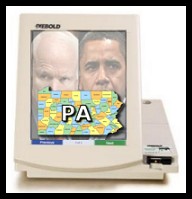
[Please note several important UPDATES added to the bottom of this article. - BF]

This just in from Pennsylvania... a federal court has found in favor of the NAACP and the 866-MYVOTE1 Election Reform Network, which were forced to sue the state's Democratic Secretary of the Commonwealth, Pedro A. Cortes, after his recent directive that emergency paper ballots only need to be given to the voters in the event that all of a precinct's touch-screen voting machines failed.

Most of PA uses 100% unverifiable touch-screen voting systems, and many of them broke down across the state during last April's Primary Election, leaving untold numbers of voters unable to cast votes.

As we reported when the lawsuit was filed last week, state law allows county clerks to give out paper ballots if just one machine breaks down on Election Day; Cortes' stunning decree, issued last month, went unchallenged by both the DNC and the Barack Obama campaign...

We heard the news of the court's decision a few minutes ago from John Bonifaz of VoterAction.org, the election watchdog legal organization which represented the plaintiff coalition. In a statement just issued, Bonifaz said, "This is a huge victory for the voters of Pennsylvania." He noted that "this ruling will ensure that many voters across Pennsylvania will not be disenfranchised when voting machines break down on Election Day."

The lawsuit [PDF], filed last week, called for Emergency Paper Ballots to be issued in the event that a majority (50%) or more broke down. That, despite PA election (3031..20: Section 1120-A) which allows for such ballots to be given out [emphasis added] "If any electronic voting system or any component thereof being used in any election shall become inoperable."

Cortes' directive had stated that [emphasis added again] "if all electronic voting machines in a precinct are inoperable...'emergency back-up paper ballots' shall be distributed immediately to eligible voters."

From today's ruling [PDF], as posted at Rick Hasen's Election Law Blog:

(2) the Secretary of the Commonwealth, Pedro A. Cortes, is preliminarily ENJOINED to direct forthwith all the County Boards of Elections throughout Pennsylvania as follows:

If 50% of electronic voting machines in a precinct are inoperable, "paper ballots, either printed or written and of any suitable form," for registering votes (described herein as "emergency back-up paper ballots") shall be distributed immediately to eligible voters pursuant to section 1120-A(b) of the Election Code. Emergency back-up paper ballots shall be used thereafter until the county board of elections is able to make the necessary repairs to the machine(s) or is able to place into operation a suitable substitute machine(s);

Even as it doesn't go nearly far enough, today's ruling should be very good news for Keystone Staters who saw voting machine breakdowns all across the state during their Primary Election last Spring, as we documented in some detail while they were being reported from local election watchdogs.

It should also be noted that the state GOP, at one point last week, had filed a motion to intervene in the case, to take the side of state Democrats in trying to limit the use of emergency paper ballots. We mention that just to give you an idea of how shameful the state Democrats' directive was in the first place.

Finally, credit must be given to Mary Ann Gould, a PA election integrity advocate from the Coalition for Voting Integrity and host of Philadelphia's "Voice of the Voters" radio program, for her tireless efforts in helping to bring Cortes' disturbing decree to light. Her show is listener supported, and facing difficult times, so please consider dropping something in her tipjar over there to help keep her, and her important work, on the airwaves!

UPDATE 6:10pm PT Cortes has just issued a statement to say that he will not appeal the court's decision. (See full statement at end of this article.)

While his statement says he will comply with the federal court order, it also notes [emphasis added]:

The department will work with county officials across the state to ensure the uniform application of this decision-that emergency paper ballots only be used when 50 percent of the voting machines malfunction or fail

As we've already noted above, PA Election Code allows for counties to give out emergency paper ballots "If any electronic voting system or any component thereof being used in any election shall become inoperable."

Does Cortes' statement mean that county clerks no longer are allowed to decide for themselves, but can only give out emergency paper ballot if 50% or more of the machines break down, instead of just one, as allowed by PA code? If so, that's quite disturbing.

No one answered the phone at the number given in the press release, but if we can learn anything, we'll update again.

UPDATE 6:30pm PT: We were able to get in touch with VoterAction.org's, John Bonifaz to ask him about the troubling language in the statement, as noted above.

After we pointed it out, he too was concerned about it, while noting that the judge has ordered Cortes to issue a formal directive to change his previous directive that decreed emergency paper ballots must be given out if 100% of the voting machines break down in a precinct. That directive did not say only in the event of 100% malfunction can paper ballots be given out --- even though, Bonifaz noted, some county clerks had interpreted it that way, as testified to during eight and half hours of hearings in the case yesterday.

The statute, in PA election code, allowing for EPBs to be given out after one machine breaks down, is a discretionary one. Clerks may give out paper in that event. Cortes' original directive, Bonifaz suggests, was hopefully to have been an attempt at adding a mandatory directive to the discretionary statute (ie. "You must give out EPBs if all machines break down.")

However, Bonifaz agreed that the language used in the press release --- a direct quote from Cortes --- which says that their office will "work with county officials across the state to ensure...emergency paper ballots only be used when 50 percent of the voting machines malfunction" is disturbing.

"If this is consciously an effort on behalf of the Secretary to rewrite the discretionary statute, he would effectively be in violation of the existing statute," he told us. "It's very problematic if that language ends up in the directive," to be issued tomorrow by Cortes, he said.

"I'm concerned if the Secretary adds to a new directive the word 'only' as to when emergency paper ballots are to be distributed, because nothing in [today's] court ruling allows for that," Bonifaz says. "For the Secretary to move this in this direction, to effectively nullify the existing discretionary statute --- his abilities as Sec. of the Commonwealth do not allow him to rewrite that statute."

We will keep our eyes on the exact wording of the directive to be issued by Cortes tomorrow, and will update, of course, as we learn more.

The statement from the Cortes' office, in response to the ruling today in federal district court, follows in full below...

FOR IMMEDIATE RELEASEOct. 29, 2008

COMMONWEALTH OF PENNSYLVANIA
Department of State
Commonwealth News Bureau
Room 308, Main Capitol Building
Harrisburg, PA 17120

CONTACT:
Leslie Amorós
Rebecca Halton
(717) 783-1621

SECRETARY CORTÉS RESPONDS TO COURT DECISION
Department Will Work with Counties to Prepare for Election Day

HARRISBURG - Secretary of the Commonwealth Pedro A. Cortés today issued the following response to a federal court's granting of a preliminary injunction that will require polling places in Pennsylvania counties to provide emergency paper ballots if 50 percent or more of their machines malfunction. Cortés said the department will not appeal the decision.

"We have reviewed the court's opinion and we will comply with its directive per their interpretation of the state election statute. The department will work with county officials across the state to ensure the uniform application of this decision-that emergency paper ballots only be used when 50 percent of the voting machines malfunction or fail-and that an adequate supply of emergency paper ballots is available.

"That said, we hope emergency paper ballots will not need to be used extensively on Election Day. Over the past four years, counties have put systems in place to remedy machine issues, including roving technicians and additional substitute voting machines.

"We share the plaintiffs' goal of ensuring that no eligible voter leaves the polls on Election Day without voting due to excessively long lines. In order to try to reduce the potential wait at the polls, the department has worked with counties to implement procedures to improve the sign-in process. An efficient sign-in process, including the use of split poll books-that is an alphabetical listing of voters from A-M and N-Z-will help move voters through the process faster. In addition, voters who want to avoid long lines are encouraged to vote mid-day during off-peak hours.

"Conducting a successful election requires proper training and clear procedures, and with this goal in mind, the department will issue a revised directive instructing the counties on how they should use emergency paper ballots when 50 percent or more of the voting systems malfunction. The department will work closely with the counties to ensure that the emergency paper ballots are administered in a consistent manner statewide."

The BRAD BLOG covers your electoral system, fiercely and independently, like no other media outlet in the nation. Please support our work with a donation to help us keep going. If you like, we'll send you some great election integrity documentary films in return. Details on that right here...


Powered by FeedBurner

Wednesday, October 29, 2008

More Vote-Flipping in TX by Machines Other Than Those Made by ES&S


Saving the world. One blog item at a time.

Direct Recording Electronic Voting Systems Made by Hart InterCivic and Diebold Also Reportedly Now Flipping Votes From Democratic to Republican in TX...

We've been reporting for the last week or so on the ES&S iVotronic touch-screen voting machines which are flipping votes from Democratic candidates to others in, so far, at least four states.

(See our special coverage page here for links to our many recent stories on this issue, and advice on what to do if the problem happens to you.)

Unfortunately, it's not just the error-prone, hackable, wholly unverifiable iVotronics from ES&S which are failing. Error-prone, hackable and wholly unverifiable Direct Recording Electronic (DRE, usually touch-screen) voting systems made by Hart InterCivic, Diebold and Sequoia Voting Systems are also having the same problems across the country. And the Democrats, who have the most to lose, continue to do nothing about it...


Here's video of one of the first voters in WV to report the problem after her attempt to vote straight-party Democrat was flipped to straight-party Republican (appx. 2:15 mins)...

On Monday, we posted a video of a WV county clerk demonstrating the vote-flips on the ES&S iVotronic and suggesting that the problem was due to touch-screen calibration issues on the machine. The video then shows the clerk inserting a cartridge into the machine to recalibrate it, after which the machine still mis-records a vote.

We also pointed out, in that article, that it doesn't matter what the screen (or even "paper trail" that some of them have) displays. The computer can record any vote it wants, any way it wants, despite what the voter is shown.

While recalibration has been ordered in many of these cases, it needs to be pointed out that there is no way that any touch-screen voting machine should ever have a cartridge inserted into it, for any reason, by anybody, after it's already been programmed for an election. That is the very moment these machines are the most vulnerable to malicious software and other forms of tampering and attack. That recalibration is being advised where these problems have occurred --- instead of complete removal from service, to be replaced by paper ballots --- is insane.

Recalibration, so far, has been the response prescribed by election officials and, to their shame, we have seen absolutely no sign that the DNC and Barack Obama attorneys have done anything to take appropriate action on these matters up until now.

But it's not only the ES&S machines that are failing. We now have reports of voting flipping in Texas on both Hart InterCivic DREs and, of course, the always unreliable ones made by Diebold.

Last week, from the Houston Chronicle:

[Harris County Clerk Beverly Kaufman's] office was informed early today that some of the first voters had cast straight-ticket Democratic ballots and then discovered that the electronic machines listed them as voting for John McCain in the presidential election.


UPDATE: Note how even after Waybright has re-calibrated the machine in the following, the iVotronic still fails to record votes correctly, as a straight Republican ticket is selected, but the machine selected Ralph Nader instead of John McCain! At appx. 1:50 mins into the video...

In the report, Kaufman, as expected, tries to play down the reports of problems. Harris County (Houston), the largest county in the second largest uses the Hart InterCivic eSlate DRE. Though the eSlate is not a touch-screen --- voters use a wheel and a button to select candidates from the computer screen --- it's still an unverifiable DRE voting system.

Our friend Pokey Anderson, an election integrity advocate in Houston, and host of KPFT/Pacifica's Sunday Monitor program, confirmed with one of the first 30 or so voters to vote on the first day of early voting at the West Gray Multi-Service Center that her straight ticket Democratic vote was flipped to McCain.

Fortunately, "the voter caught it, and finally called for help from a pollworker, and they got the machine's McCain choice changed back," Anderson told us. "She said the pollworker told her she was not the only one who had had this problem."

We've received reports that some locations in TX, using the Hart eSlate, have taken to taping signs on the machines which read "This is not a touch-screen!" Whether that's meant to deceptively ease voter concern about the systems --- which are still unverifiable DREs, just like touch-screens but with a wheel to make selections, instead of a touch-sensitive screen --- or simply an attempt at a helpful instruction to keep folks from trying to select candidates by tapping the screen, we couldn't tell you. Either way, Hart's DRE is as unverifiable and susceptible to tampering and vote-counting error as those made by ES&S, Sequoia or Diebold.

Speaking of Diebold, this in on Tuesday from another part of TX, El Paso County, as reported by the local NBC affiliate KTSM, NewsChannel 9:

Newschannel 9 received a complaint from one voter who says he tried to vote straight ticket Democrat.

But when he reviewed his finished ballot he noticed that all votes were cast for Republicans.

El Paso county election administrator Javier Chacon says the machines are user-friendly but mistakes can happen. Chacon says make sure you don't have anything hanging off your clothing or wrists that could inadvertently change your vote. If you want to be more precise you can ask for a stylus pen to cast your vote.

El Paso County uses the hackable, error-prone, unverifiable Diebold AccuVote TS touch-screen DRE.

Finally, for good measure, and by way of reminder, the ES&S iVotronics continue to flip votes in TX also. Adding to the reports on that from last week on that, CNN reported yesterday that a caller from Beaumont, TX called the CNN voter hotline (877-GOCNN08) to report the now-too-familiar problem which occurred when he took his mother to vote.

"She went to punch the selection for Obama and it flipped to McCain," the caller said, according to CNN. "They need to do something about this."

But again, the Democrats, to our knowledge, have taken no action to remove these machines from service and demand voters be provided instead with verifiable hand-marked paper ballots.

Our special coverage page on DRE Failures 2008 is right here...

The BRAD BLOG covers your electoral system, fiercely and independently, like no other media outlet in the nation. Please support our work with a donation to help us keep going. If you like, we'll send you some great election integrity documentary films in return. Details on that right here...

Powered by FeedBurner

Sunday, October 26, 2008

The Brennan Center for Justice details the voter suppression tactics unfolding as America faces another presidential election.

From: AlterNet

By Wendy Weiser, Brennan Center for Justice. Posted October 22, 2008.

Brennan Center: 2008's Voter Suppression Incidents So Far

(Editor's note: The Brennan Center will be updating and re-posting this document regularly between now and Election Day. This inventory is current as of October 22, 2008)

1- No Match, No Vote - Ohio - Florida - Wisconsin

No Match, No Vote

ISSUE: Some states will not register voters or will purge them from the voter rolls if election officials cannot match their voter registration information against information in other government databases. The problem is the computer match processes states use are inherently unreliable. Between 15% and 30% of all match attempts fail because of typos, other administrative errors, and minor discrepancies between database records, such as a maiden name in one record and a married name in another or a hyphen in one record and not another. No match, no vote policies can block hundreds of thousands of voters through no fault of their own. More information on no match, no vote policies is available here. This year, no match, no vote efforts across the country, if successful, could have a significant impact on the election, affecting tens of thousands of new voters.

Ohio

On September 26, 2008, the Ohio Republican Party asked a federal court to issue an emergency ruling requiring the state to generate a list of more than 200,000 new voters whose information did not match other state records, presumably so those voters could be purged from the rolls right before the election, forced to vote provisional ballots, or challenged at the polls. They asked the court before the absentee ballots cast by new registrants were opened and counted. A federal court granted the temporary restraining order, and after a three-judge panel on the U.S. Court of Appeals for the Sixth Circuit stayed that order, the full appeals court, sitting en banc, reinstated it. On emergency review, the U.S. Supreme Court vacated the TRO on October 17, 2008, preventing chaos in the election in Ohio and protecting hundreds of thousands of Ohio citizens from disenfranchisement-by-typo. That same day, the Ohio Republican Party filed a virtually identical suit with the Ohio Supreme Court, seeking essentially the same relief they lost in the federal courts. They also seek to prevent the counting of absentee ballots cast by unmatched voters unless or until the mismatches are cleared. The Republican fundraising consultant who brought the lawsuit has voluntarily dismissed his case. Ohio Republican Party Chairman Robert T. Bennett said he asked the plaintiff David Myhal to drop the case and plans to meet on October 22, 2008 with Attorney General Nancy H. Rogers, representing Secretary Brunner, to discuss an out-of-court solution to the dispute. Regardless of the outcome, non-matching voters may still face challenges on Election Day by partisan election workers. Further details can be found here.

Florida

On September 8, 2008, the Florida Secretary of State instructed election officials to reject voter registration applications that do not pass an error-prone computer match process. In the first three weeks of the policy, 15% of registrations were initially bounced because of failed computer matches; election officials were able to catch and correct obvious typos in about 3/4 of these cases, but to date, here.

Wisconsin

After the Wisconsin Government Accountability Board (the state's election board) rejected a proposal in July to retroactively implement a no "match, no vote" policy for all voters who registered since 2006, on September 10, the Attorney General sued the board seeking to force such a policy right before the election. The Board conducted an audit of its voter rolls and found a 22% match failure rate, including for 4 of the 6 members of the board. The court ruled on Thursday, October 23, 2008 that the attorney general had no authority to sue, however Van Hollen said he would appeal. More information can be found here.

2- Other states - Voter Purges - Possible Illegal Purges Reported by New York Times - Michigan - Colorado - Georgia naturalized citizens - Muscogee, Georgia - Mississippi - Voter Challenges - Montana

Other states

No match, no vote policies are in place also in Louisiana, Iowa, and South Dakota pursuant to policies adopted well before the 2008 elections. Tens of thousands of voters have been denied registration in those states. Evidence suggests that Colorado also may be treating some voter registrations that fail to match as incomplete.

Voter Purges

ISSUE: Election officials across the country routinely purge millions of names from the voter rolls. Although purging is necessary to keep the voter rolls up to date and accurate, a recent Brennan Center study demonstrates that the processes states use for purging are prone to error and vulnerable to manipulation. Purges are typically done without notice to affected voters or the public, and without any public scrutiny whatsoever. As a result, thousands of registered voters show up at the polls each election year only to find that they are not on the rolls and cannot cast a ballot that will be counted. This year, unreliable and possibly illegal purges could keep thousands of votes from being counted.

Possible Illegal Purges Reported by New York Times

According to a recent front-page article by the New York Times, several states have been illegally purging their voter rolls this year, including Colorado, Georgia, Indiana, Louisiana, Michigan, Ohio, and Nevada. (The Brennan Center has not independently verified all these purges.)

Michigan

Michigan illegally purged its voter rolls this year within 90 days of an election and using non-forwardable mailings to recently registered voters, according to a recent federal court ruling. The court ordered the restoration of about 1,400 voters who had been removed because their voter identification cards were returned as undelivered.

Colorado

In response to a New York Times article, the Colorado Secretary of State admitted that at least 2,454 voters were purged illegally within 90 days of a federal election. Several thousand additional records were purged as potential "duplicates" within 90 days of the election, also in violation of federal law. Another several thousand were illegally purged based on non-forwardable mailings to newly registered voters.

Georgia naturalized citizens

Georgia recently began using an unreliable matching process to purge the voter rolls of alleged non-citizens. The process they use misses naturalized citizens because it only checks the citizenship documents used to obtain driver's licenses, no matter how long ago, and those records are not updated when legal residents become naturalized. A federal court refused to block this practice in a recent lawsuit filed by the Mexican American Legal Defense and Education Fund and the Lawyers' Committee for Civil Rights Under Law.

Muscogee, Georgia

Earlier this year, a county election administrator in Muscogee County, Georgia purged 700 people who were supposedly ineligible because of criminal convictions. The purge was highly inaccurate and included people who never received even a parking ticket.

Mississippi

About a week before the Mississippi primary, an election administrator in Madison County, Mississippi improperly purged approximately 10,000 voters, reportedly from her home computer. Reportedly, the purge was detected when it was discovered that a local candidate was removed from the voter rolls. By all accounts, the Secretary of State's staff successfully reinstated the erroneously purged voters in time for the primary.

Voter Challenges

ISSUE: Political operatives sometimes challenge voters' eligibility either before Election Day or at the polls, based on names culled from unreliable caging lists or other lists they develop. While the rules and procedures for voter challenges vary from state to state, these challenges can lead to voter intimidation, long lines at the polls, and disenfranchisement of eligible voters. Historically and in recent years, caging and challenge operations have targeted minority communities, students, and homeless citizens. Widespread challenges are expected across the country on Election Day. Recent incidents include:

Montana

The Republican Party of Montana challenged the registrations of over 6,000 voters in 7 counties based on change of address information. Many were service members and students eligible to vote in Montana but who had their mail forwarded to where they were serving or going to school. Under Montana's challenge rules, these voters would have had to answer the challenges to the satisfaction of election officials before being allowed to vote. After a public outcry--including criticism by the Republican Lieutenant Governor--the party abandoned the challenges. For more information, click here. In a resulting lawsuit brought by the Montana Democratic Party, on October 10, 2008, a federal judge found that the challenges were frivolous and that it would violate federal law for state election officials to deny anyone the ability to vote based on these challenges.

3- No home, no vote - Ohio mailer - Technical Barriers to Voter Registration and Voting - Colorado registrations - Florida registrations - Ohio absentee ballots - Student Voting Barriers - Dorm room addresses

No home, no vote

The Chairman of the Republican Party of Macomb County, Michigan reportedly told an online publication that the party planned to mount challenges to voters whose names appeared on foreclosure lists. After public criticism and instructions by the Michigan Director of Elections that these challenges are insufficient under Michigan law, the Chairman denied that there were such plans (and even sued the publication for libel). There have been fears and reports that similar challenges will be mounted in other states, particularly battleground states such as Ohio where more than 5% of homes are currently in the foreclosure process. Similar challenges are possible across the country on Election Day unless election officials take immediate steps to ensure that those in danger of losing their homes do not also lose their vote. On October 20, 2008, the Democratic and Republican parties agreed that appearance on a foreclosure list is not a reasonable basis to challenge a voter and that no voter will be challenged on that basis.

Ohio mailer

Ohio election officials sent a non-forwardable mailer to voters on the rolls, and over 600,000 were returned as undeliverable. The list was provided to the political parties, and there were fears that this list would be the basis of challenges. After concerns were raised, the Ohio Secretary of State issued a directive explaining that returned mail alone is not a sufficient basis to sustain a challenge. More information on why returned mail is an unreliable indicator of residence or eligibility can be found here.

Technical Barriers to Voter Registration and Voting

ISSUE: In the Jim Crow era, technical barriers to voter registration and voting were common. In the 1960s, Congress tried to put an end to these types of barriers, prohibiting officials from denying the right to vote based on any immaterial "error or omission" on voting-related paperwork or records. In this election cycle, there has been a resurgence of technical barriers based on the failure to check unnecessary boxes on forms.

Colorado registrations

Colorado is treating applications missing unnecessary checkmarks to indicate that the registrant lacks a driver's license as incomplete. Thousands of recent registrations are already affected, and there will likely be more as counties process new forms.

Florida registrations

Florida still rejects voter registration forms submitted without checkmarks in check boxes that are duplicative of other information on the forms. Thousands of votes were lost in prior federal elections because of this practice.

Ohio absentee ballots

In September 2008, the Ohio Secretary of State announced the election officials must reject absentee ballot requests made by voters whose eligibility was not in serious doubt because of their failure to check an unnecessary check box. A federal court ordered the Secretary of State to process those ballot requests.

Student Voting Barriers

ISSUE: Students who attend school away from their homes often fulfill residency and other requirements to be able to register and vote in the communities in which they attend school, but there are obstacles and efforts to discourage them to register and vote. Across the country, there have been reports of widespread misinformation about student voting rights, misleading and intimidating statements, and registration and residency barriers unique to students. The fact that students are readily identifiable at their college community polling stations also makes them easy targets for partisan challengers or voter intimidation efforts. The result is a disproportionate number of student voters being challenged at the polls, discouraged from voting, or prematurely told to cast a provisional ballot.

Dorm room addresses

Local registrars in several states, including in Virginia, were denying registration to students who provided dorm room addresses even though those are valid registration addresses.

4- Misleading and intimidating information - Prairie View, Texas - Restrictive Residency Rules - Restrictive Absentee Voting - Intimidation Aimed at Students - Voter Registration Access - Veterans - Voter registration drive restrictions - Noncompliance with federal voter registration law - Voter Intimidation - Deceptive Practices and Philadelphia fliers

Misleading and intimidating information

A registrar in Montgomery County, Virginia, affecting Virginia Tech University, issued a memo giving incorrect and intimidating information to students about the consequences of registering to vote, including possible loss of financial aid and tax dependence status. Similarly, a county clerk in Colorado Springs, Colorado incorrectly told students at Colorado College that they could not vote at school if their parents claimed them as dependents on their federal tax returns. The websites of the Virginia and Indiana Secretary of States still contain misleading information that could dissuade eligible student voters.

Prairie View, Texas

On October 10, 2008, the registrar of Waller County, Texas entered into a consent decree with the U.S. Department of Justice to stop imposing unfair and illegal barriers to student voting.

Restrictive Residency Rules

Several states make it very difficult for students to establish residency for voting purposes. In Idaho and Tennessee, for example, students cannot establish voting residency unless they have affirmative plans to remain in the state after graduation. Virginia and Indiana also make it difficult for students to establish residency.

Restrictive Absentee Voting

Michigan and Tennessee require all first-time voters who registered by mail to vote in person; they cannot vote absentee. This makes it nearly impossible for college students (a great percentage of whom are young, first-time voters) to vote in their hometowns.

Intimidation Aimed at Students

A flier recently disseminated on the campus of Drexel University in Philadelphia warned that undercover officers would be present at the polls, looking for voters with outstanding warrants or parking violations.

Voter Registration Access

ISSUE: According to the U.S. Census Bureau, 30% of Americans were not registered to vote in 2006. A range of barriers to voter registration access could affect registration rates in certain communities. Several states have enacted laws that impose unnecessary burdens on organized efforts to register voters, which target communities that have the greatest barriers to registration. Threats of criminal penalties and crippling civil fines for failure to comply with requirements have forced community groups to stop or substantially cut down on registering voters. A policy brief on restrictions to voter registration drives can be found here.

Veterans

The Department of Veterans' Affairs denied voter registration access to residents and patients of its facilities, refusing to allow election officials or nonpartisan groups to offer voter registration services, and failing to provide such services itself. A last-minute change in policy offered only a partial fix to this problem. More information is available here.

Voter registration drive restrictions

Several states, including New Mexico and Florida, have enacted restrictive laws that interfere with the ability of groups to do voter registration drives. The Florida law was tied up in litigation filed by the Brennan Center and so has not been in effect for this election season. A court refused to block the New Mexico law, and a number of community groups, especially those that work with volunteers, have not been able to register new voters.

Noncompliance with federal voter registration law

A number of states have not been providing voter registration services at social service agencies, as required by the federal Motor Voter law. Recent lawsuits filed by Project Vote and Demos seek to enforce states' compliance with the implementation of the NVRA.

Voter Intimidation and Deceptive Practices

ISSUE: In recent elections, robo-phone calls and misleading flyers, often targeting minority and low-income communities, have spread false information regarding elections and voting qualifications. For examples of such documents, click here.

Philadelphia fliers

Deceptive fliers about the consequences of voting were distributed in a predominantly African American neighborhood in Philadelphia.

5- Greene County, Ohio - Hamilton County, Ohio - Poor Ballot Design - Mississippi Senate race - Twelve Ohio counties

Greene County, Ohio

A law enforcement officer in Greene County, Ohio sought the names of 300 voters who registered and voted at the beginning of Ohio's early voting period in a town made up largely of students. The effort, which was later withdrawn, was criticized as an effort to intimidate student voters and deter others from voting.

Hamilton County, Ohio

In a move that could intimidate and deter voters, Hamilton County Prosecutor Joe Deters recently requested, via subpoena, personal information for 40% of the voters who registered and immediately cast a ballot during the weeklong period in which Ohio allows same-day registration and voting.

Poor Ballot Design

ISSUE: Poorly designed ballots -- remember butterfly ballots? -- can lead to the loss of thousands of votes. A recent Brennan Center report demonstrates that ballot design problems are still widespread and can threaten many votes. Already, there have been problems relating to November's election.

Mississippi Senate race

Mississippi election officials were sharply criticized, in a New York Times editorial and in a letter sent by the Brennan Center, for their decision to place the Wicker-Musgrove U.S. Senate race at the bottom of Mississippi's ballot. This "ballot trick" placed the Senate race far below the other federal races listed in the 2008 election, creating a confusing layout for the ballot, one that could potentially mislead and disenfranchise hundreds of thousands of Mississippi voters in that race, particularly low-income and minority voters. More information can be found here.

Twelve Ohio counties

Twelve Ohio counties released sample paper ballots that split the presidential contest over two columns for this November's election. As the Brennan Center's study found, this particular layout often confuses voters and causes them to double-vote, an action which ultimately results in an uncounted ballot. On September 17, 2008, the Brennan Center sent a letter to the board of elections in all Ohio counties, urging them to reconsider their ballot layout and place the presidential contest in a single column on the paper ballot. The Ohio Secretary of State forwarded the letter to all county board of elections as well. Further details can be found here.


Out now, two crucial reports focused on barriers that prevent eligible voters from casting ballots that count. Voter Purges is one of the first examinations of the practice—often controversial—of updating voter rolls by removing voters from registration lists. This detailed study discovered a process that is shrouded in secrecy, prone to error, and vulnerable to manipulation (see a CBS News report here). The second report, De Facto Disenfranchisement, reveals widespread misunderstanding among state election officials of laws governing the right to vote of citizens with criminal convictions. For a full list of recent voter suppression incidents, click here.

Possible Election Trouble in Key Swing States

Oct 22 - 200,000 voters at risk in Ohio. African American voters inundated with misleading voter information in Pennsylvania and elsewhere. Confusing ballot design and instructions could result in hundreds of thousands of lost votes. With two weeks to go before the Election, these and other practices -- including suspected purges, no match no vote policies, voter challenges, and intimidation -- could disenfranchise enough voters to affect the election outcome.

The Brennan Center's continuously updated report provides a road map to potential problem spots, and a chance to do something about them. Check back for updates. New update available for October 24th.

SCOTUS Protect Voters, Throws Out Ohio Ruling

Oct. 17 – In a decision today, the US Supreme Court vacated a federal court's order that would have required the Secretary of State to turn over the records of 200,000 Ohio voters whose names did not perfectly match government databases. These voters—most of whom did not match records because of simple data-entry errors and typos—would have been at serious risk having their voter registrations cancelled, being challenged at the polls on Election Day or forced to vote only by provisional ballot. "The Supreme Court has wisely vacated the lower court's wrongful and dangerous order , protecting hundreds of thousands of Ohio voters from disenfranchisement-by-typo," said Brennan Center attorney Adam Skaggs. The unsigned ("Per Curiam") found here.

Reviews Mixed for States' Voting Readiness

Oct. 16 – Today the Brennan Center for Justice, Common Cause and Verified Voting jointly issued a 50-state report card that grades each state on its preparedness for election system breakdowns and offers concrete steps election officials can take in the weeks before the election to make sure every vote is counted accurately. The report, Is America Ready to Vote? State Preparations for Voting Machine Problems in 2008 (click here for report), finds that many states have made dramatic improvements in their voting systems, but still urges election officials to have backup measures in place—like emergency paper ballots and sound ballot counting procedures—to ensure the integrity of the vote.
IN THE NEWS:
Seven Things That Could Go Wrong on Election Day -- Time Magazine, Michael Scherer 10/24/08
Big Setback for Voter Suppression Efforts in Swing States -- Alternet, Steven Rosenfeld 10/23/08
Sorry, I Can't Find Your Name -- New York Times, Editorial 10/23/08
Our View on Clean Elections -- USA Today, Editorial 10/22/08
Restore Trust in Voter Rolls -- Christian Science Monitor, Editorial 10/22/08
Stumper's Handy Voting Problem Primer -- Newsweek's 'Stumper' Blog, Sarah Kliff 10/21/08
Voter Registration Lawsuit is Dropped -- Columbus Dispatch, Mark Niquette 10/21/08
Voter Registration Flashpoints -- The Nation, Katrina vanden Heuvel 10/20/08
Financial boom, financial bust: What happened? -- Los Angeles Times, Eric Lane and Michael Oreskes 10/18/08
Law Rejects Many Voters -- Herald Tribune, Todd Ruger 10/18/08
The Vanishing Male Voter -- Newsweek, by Tony Dokoupil 10/17/08
Ruling May Impede Thousands of Ohio Voters -- NY Times, by Ian Urbina 10/16/08
Beyond the Spin: Threats to the ballot box -- Philadelphia Inquirer, by George Curry 10/16/08
Ready or Not: Report Predicts Voting Glitches -- Wall Street Journal, by June Kronholz 10/16/08
Both Sides Sling Election Fraud, 'Cynical Ploy' Charges -- Cleveland Plain Dealer, Stephen Koff 10/15/08
Check-off Box Delays Thousands of Voter Registrations -- The Denver Post, Tim Hoover 10/14/08
Ohio GOP Plays Voter Fraud Card -- Associated Press, Stephen Majors 10/13/08
Recent Ruling May Disenfranchise Thousands of Voters in Tennessee -- The Tennessean, by Mary Mancini 10/12/08
One Dollar for Every West Virginian -- Slate, by Amanda Frost 10/10/08
Why Are Convicted Felons in Battleground States Being Told They Can't Vote? -- The Philadelphia Tribune, by Christopher Moraff 10/09/08
Not Another Voter Disenfranchisement Movie -- Daily Kos, by Nicole Kief 10/09/08
A Ballot's Breadth Away From Rejoining Society -- City Limits, by Curtis Stephen 10/06/08
Push to get released felons to voting booth -- San Francisco Chronicle, by Dionne Walker and Mike Baker 10/05/08
Surprise: You're off the voter list -- Atlanta Journal-Constitution, by Rhonda Cook 10/03/08
Three New Reports Analyze Voting Rights for Convicted Criminals -- Blog of Legal Times, by Jeff Jeffrey 10/01/08
Voter Registration May Be Hampered -- Roll Call, by Matthew Murray 10/01/08
Guantanamo Prosecutor Quits Over Detainee Case -- Associated Press, by Mike Melia 09/24/08
As Homes Are Lost, Fears That Votes Will Be, Too -- NY Times, by Ian Urbina 09/24/08
Justice Department Won't Send Prosecutors to Polls -- Associated Press, by Lara Jakes Jordan 09/24/08
Guantanamo Trials' Overseer Reassigned -- Washington Post, by Peter Finn 09/20/08
Two Percent of Florida's Vote Can Spark a Battle -- St. Petersburgh Times, By Steve Bousquet 09/20/08
Firm Subpoenaed in Vote Tally -- Washington Post, by Nikita Stewart and Mary Pat Flaherty 09/19/08
Hanging "Chads" Are No More -- The Economist, via Seattle Post Intelligencer 09/19/08
Elections Board Has No Answers for Students -- The News & Advance, by Olympia Meola 09/18/08
States Restore Voting Rights for Ex-Convicts -- NY Times, by Solomon Moore
More IN THE NEWS 1 2

Justice Department Targets ACORN But Ignores GOP Voter Suppression

On the eve of the 2008 election, the Department leaks a FBI probe of ACORN but remains silent on widespread voter intimidation tactics.
From: AlterNet

Partisan considerations still appear to be contributing to the Department of Justice's actions when it comes to enforcing the nation's voting rights laws.

With Election Day less than two weeks away, proponents of more tightly regulating the voting process -- this time led by congressional Republicans -- have gotten their desired response from the nation's guardian of civil rights' laws: a FBI investigation into ACORN, the low-income advocacy coalition that registered 1.3 million new voters in 2008.

Last week, two FBI officials told reporters an ACORN investigation was underway, violating Department rules for disclosing information on cases that could impact an election. The Obama campaign's response was to ask the Attorney General to include that leak in a special prosecutors' investigation of the U.S. attorney firing scandal. No response to that request has been forthcoming.

But more disturbing to civil rights attorneys is the Department's silence on what voting rights lawyers say are myriad voter suppression tactics by partisans in the campaign's final weeks. These efforts include attempts by Republicans to disqualify legal voter registrations, unlawfully purge voters, threaten individual voters with polling place challenges, fabricate barriers to student voting and abuse prosecutorial authority by investigating 2008's early voters.

"Voter suppression is not new. But this year has brought heightened efforts to disenfranchise and intimidate voters," said Wade Henderson, executive director of the Leadership Conference on Civil Rights, in a Wednesday press conference. "We've seen legal challenges to registered, valid voters in Ohio; Fear tactics threatening that mortgage foreclosures or unpaid bills will thwart your right to vote or may even result in arrest; and massive attempts to confuse voters through robo-calls, official looking web sites and e-mails. These are targeted and insidious attempts to suppress the vote, particularly in communities of color."

The Justice Department did not respond to requests to comment.

What is most striking about the voting rights lawyers' criticism of the Department is that the agency does not have to wait until Election Day to act. Under Section 11(b) of the Voting Rights Act, the Department can move to stop voter intimidation schemes without having to prove the motive behind those actions. This section of the law does not require the government show any intent by partisans to discriminate, the lawyers say. Instead, if the result is intimidation or suppression of minority voters, it can act.

"We really need the Justice Department to get out there and make a pronouncement, publicly, that voter intimidation and voter suppression will not be tolerated because it violates federal law," said Gerry Hebert, executive director of the Campaign Legal Center and a former Department Voting Section Chief. "We have asked the Attorney General to do this and thus far there has been a deafening silence."

"I think the Department's response to these issues, at best, is tepid, and at worst ignores what we think is a serious problem and their responsibility to address it," Henderson said. "The Department of Justice often argues that its jurisdiction is limited. But we think the interpretation that they have given to their jurisdiction is exceedingly narrow and it certainly ignores the larger responsibility to use the bully pulpit of the Attorney General to make clear that the Department will vigorously prosecute where possible, under federal law, any attempt to suppress the right of duly registered American citizens."

Henderson said he and other voting rights advocates recently met with the Department's Civil Rights Division to discuss issues surrounding voting rights enforcement in the 2008 election. He and others civil rights attorneys said there are precedents for the Department to discuss their enforcement priorities -- as opposed to citing specific cases -- before an election.

"I spent 21 years in the Justice Department and there is precedent for the Department to issue a public statement about how they are going to interpret or enforce the law," Hebert said, giving the example of statements made on the eve of congressional elections that preceded federal redistricting.

Other election lawyers say the Department has "ramped down" from enforcing voting rights cases since the U.S. attorney firing scandal and Michael Mukasey became Attorney General. They did praise some recent cases or settlements where the Department acted on the behalf of voters, such as joining a suit in Georgia where local election officials wanted Latinos to present proof of citizenship as part of registering to vote -- which was not in their state's law, as well as fostering a settlement in Prairie View, Texas, where local election officials have repeatedly interfered attempts by university students to vote.

However, some recent campaign tactics by Republican partisans clearly have violated federal law and have drawn no Department response, the civil rights lawyers say.

Most notable in this regard in an investigation launched by Joe Deters, the county prosecutor in Hamilton County, Ohio, where Cincinnati is located, of several hundred people who registered to vote and then voted during a week-long window earlier this month. Even though Deters, who is the southwest Ohio McCain campaign chairman, this week handed the investigation to a "special prosecutor" after protests, a letter sent by the civil rights groups to that lawman, Michael O'Neill, compared Deters' investigation to intimidation by Alabama sheriffs who violated the 1957 Civil Rights Act "when they followed persons on their way home from a voter registration meeting and arrested them for traffic violations."

"Moreover, we believe that an investigation of persons based on nothing more than their exercise of their right to register and vote would also violate their constitutional rights under the First and Fourteenth Amendments to the U.S. Constitution," the letter said, after detailing how Deters' investigation violated the voter intimidation sections of the Voting Rights Act of 1965 and the National Voter Registration Act of 1993.

The groups singing the letter, which urged O'Neill to "suspend any investigation," include the American Civil Liberties Union of Ohio, ACLU Voting Rights Project, Demos, Lawyers Committee for Civil Rights Under Law, Project Vote and the Miami Valley Voter Protection Coalition and numerous Ohio law school professors. Letters were also sent to the Justice Department's Voting Section chief, and chief of the Criminal Section of the Department's Civil Rights Division.


"Four hostile newspapers are more to be feared than a thousand bayonets. "
Napoleon Bonaparte

http://elrinconcitodeaurora.blogspot.com/

Friday, October 24, 2008

Police Declare 'Mutilation' of McCain Campaign Worker a Hoax

From MichaelMoore.Com Via Editor & Publisher

October 24th, 2008 3:50 pm

By Greg Mitchell / Editor & Publisher

NEW YORK It had drawn wide local and national -- even political attention, with some of the candidates for president/vice president weighing in or even calling -- but now the story has fallen apart. Police in Pittsburgh have declared it all a hoax, and are charging the McCain worker at the center of the episode.

It started yesterday afternoon with Matt Drudge screaming at the top of his site in red type -- but no siren -- that a Pittsburgh campaign worker for McCain, age 20, had been viciously attacked and the letter "B" carved into her face, presumably by a Barack Obama fan. Her name, it soon emerged, was Ashley Todd and she had come to Pittsburgh from College Station, Texas, to help out.

It started to appear overblown (Drudge downgraded it to smaller, black type) as the police noted that it seemed to be a robbery ($60) and she did not seek medical attention. But later press reports said she would visit a hospital, Sarah Palin and perhaps John McCain had called her, and Obama camp had condemned, although McCain/Obama angle to a story not yet confirmed.

Still later, conservative columnist Michelle Malkin, and some others, grew skeptical. For one thing, the "B" was carved a little too lightly and perfectly -- and backward, as if done using a mirror. Smoking Gun probed a too-pat "Twitter" angle and Gawker looked at her MySpace page.

Then police said that evidence from the ATM that she reportedly visited did not match her account. And then she changed her story, admitting that her assailant did not see a McCain bumper sticker on her assault, and adding to he account a sexual assault and losing consciousness.

John Moody, executive vice president at Fox News, commented on his blog that "this incident could become a watershed event in the 11 days before the election. If Ms. Todd’s allegations are proven accurate, some voters may revisit their support for Senator Obama, not because they are racists (with due respect to Rep. John Murtha), but because they suddenly feel they do not know enough about the Democratic nominee. If the incident turns out to be a hoax, Senator McCain’s quest for the presidency is over, forever linked to race-baiting."

Now the Pittsburgh TV station KDKA reports: "Police sources tell KDKA that a campaign worker has now confessed to making up a story that a mugger attacked her and cut the letter 'B' in her face after seeing her McCain bumper sticker.

"This afternoon, a Pittsburgh police commander told KDKA Investigator Marty Griffin that Todd confessed to making up the story. The commander added that Todd will face charges; but police have not commented on what those charges will be."


Powered by FeedBurner

Wednesday, October 22, 2008

What’s The Message?

While Palin has often claimed that Obama doesn’t say much (though he is ‘eloquent’) the truth is Palin says nothing at all of any real worth. Her job is apparently to rile crowds into racist and terrorist remarks and threats through speaking of “our values” and “our beliefs”. On this issue McCain had nothing to say at the final debate other than he didn’t agree with it. But surely he’s more than happy to have Palin rile up these crowds if it means a vote.

I believe, quite simply put, that McCain equals irresponsibility. His party’s rallies remind me too much of anti-migrant rallies. It’s actually quite scary and one should note how McCain is always spewing hateful rhetoric even when he’s trying to be positive. If he (or Palin) is talking about keeping the world ’safe’ - he’s singing “bomb, bomb Iran” and if they’re talking about ‘Main street’ then they’re claiming that those neighbors of yours that ‘just don’t work hard enough’ are your enemy. And surely the migrants are your enemy because the poor are always the enemy. Just ask The Heritage Foundation who is proping up McCain through their ’study’ on his tax plan.

When it comes to Palin’s constant talk about “our values” and “our beliefs” I have to ask what this has to do with the Presidency. If the idea of America is that you are free then why do we need Palin pushing her beliefs on us? And speaking of what we stand for and the struggling ‘common man/woman’ should we all get shopping sprees in New York that go over $100k? I love to hear the McCain/Palin ticket hawk the idea that Obama wants to take the money of those without while McCain is worth millions upon millions and Palin is now being showered with wardrobes worth more than the average home.

As far as I’m concerned if you vote for McCain you need your head checked. He’s manipulating truth just like Bush does and even Buchanan thinks McCain will make Bush look like Gandhi.


Powered by FeedBurner

Sunday, October 19, 2008

Tell McCain to End the Politics of Hate


Dear Senator McCain and Governor Palin,

Time and again in America, people of all races and backgrounds have overcome division and fear, and come together to uplift the country and create a more equal and just society. It's part of what makes this country great.

With an African-American nominee running on a major party ticket and a woman on the Republican ticket for the first time in history, this campaign has seen Americans--men and women of all races--inspired to continue that great tradition, coming together to bridge the gaps that history has set between us in service of our national progress.

But let us be clear: while we have made great strides in this country when it comes to racial equality, we are not finished. Now, more than ever, we need leadership that understands that we live in complex times where too many are quick to judge another by the complexion of their skin or the sound of their name.

In the last few weeks, Senator McCain and Governor Palin, rhetoric at your campaign events has taken an increasingly dangerous tone that seems to ignore the precarious state of our progress when it comes to race and ethnicity.

Supporters at your rallies and other events have used hateful language and called for violence against Sen. Obama yelling "kill him!" "off with his head!" and "bomb Obama."

For the most part, you have stood by in silence. In addition, you have also repeatedly made statements that somehow connect Senator Obama with terrorism. Your surrogates have emphasized his middle name. This is problematic and dangerous, and we believe helps create the conditions that have given rise to these incidents of violent rhetoric from some of your supporters.

Today, we're standing together as Americans of all political persuasions to express our deep concern that the decisions of your campaign are contributing to a dangerous atmosphere of paranoia, division, and hate that, as we have already seen, has the potential to seriously harm our country and its progress.

Dr. Martin Luther King, Jr. said, "The ultimate measure of a man is not where he stands in moments of comfort and convenience, but where he stands at times of challenge and controversy."

In these trying times, candidates seeking the highest offices in the land must call on the best in each of us, and call off the worst.

We urge you to join people of conscience from all races and backgrounds to reject the politics of division and fear, and come together to uplift the country and create a more equal and just society.

-- The undersigned --

GO HERE TO SIGN THE PETITION

We'd like to talk about the pressing issues facing our country: the woeful economy, rising unemployment, the housing crisis, and the wars in Iraq and Afghanistan. But we can't talk about them because John McCain and Sarah Palin have distracted us with the politics of hate and fear.

Instead of discussing the real issues plaguing Americans, McCain and Palin have turned to fear-mongering and race-baiting, stoking the prejudices of their supporters. The situation has become so critical that we've teamed up with Color of Change to put an end to these dangerous mob scenes.

Things have gotten so out of control that some conservatives have come forward to denounce McCain and Palin's hate-mongering. In an Op-Ed for The Baltimore Sun, Frank Schaeffer writes: "John McCain: If your campaign does not stop equating Sen. Barack Obama with terrorism, questioning his patriotism and portraying Mr. Obama as "not one of us," I accuse you of deliberately feeding the most unhinged elements of our society the red meat of hate, and therefore of potentially instigating violence."

Don't let McCain and Palin undo the decades spent fighting for civil rights and equality in our country.


John McCain's Mob


Also on You TUBE and Quicktime


Powered by FeedBurner